
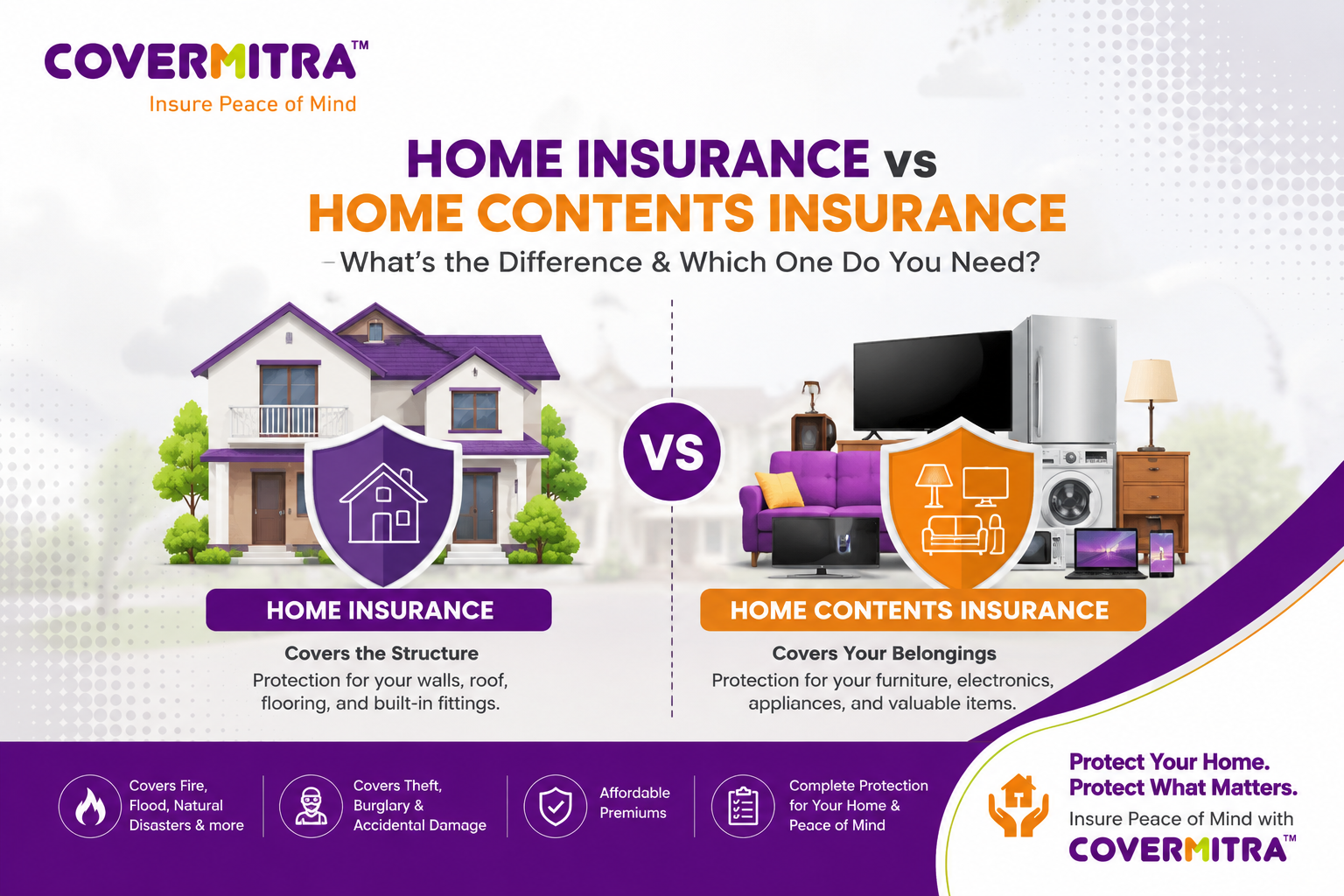
Your home is one of your biggest investments. But have you ever wondered what would happen if a fire, flood, burglary, or short circuit damaged your house or the valuables inside it? This is where understanding the difference between Home Insurance and Home Contents Insurance becomes essential.
Home Insurance, also known as Building Insurance, protects the structure of your home. It covers permanent parts of the property, such as the walls, roof, floors, doors, windows, and built-in fixtures. If your home is damaged due to events like fire, storms, earthquakes, or other covered risks, Home Insurance helps pay for repair or rebuilding costs.
Home Contents Insurance protects the belongings inside your home. This includes furniture, electronics, appliances, clothing, kitchen items, and other personal valuables. If these items are damaged due to covered events like fire, theft, or water damage, the policy can help cover the cost of repair or replacement.
Home Contents Insurance protects everything inside the house.
For example, if heavy rains damage your ceiling, Home Insurance may cover the repair of the building. If the same incident damages your sofa, television, or laptop, Home Contents Insurance may help cover those losses, depending on your policy.
If you own a home, having both types of coverage offers more complete financial protection. While the building is your investment, the belongings inside represent years of hard work and memories. Repairing structural damage is expensive, but replacing furniture and electronics can also put a strain on your finances.
Unexpected events can happen at any time, and the cost of recovery can be significant. Choosing the right insurance helps you protect not only your property but also your peace of mind.
Before buying a policy, understand what is covered, compare available options, and choose coverage that matches your needs. A small investment today can help you avoid major financial losses tomorrow.
Protect your home. Protect your valuables. Protect your future.
CoverMitra Insurance Broking Pvt. Ltd. is an IRDAI-authorized insurance broking firm that aims to simplify insurance for its customers to make Smart Choices.
IRDAI License No. 600 Valid till: 01/06/2026
Incorporation date 10/10/2016
Quick Links
1. Arson: Intentional fire-setting or fraudulent activity.
2. Vacant or unoccupied property: Extended periods of vacancy.
3. Acts of war and terrorism: Damage caused by war or terrorism.
4. Nuclear incidents: Damage from nuclear reactions or radiation.
5. Wear and tear or lack of maintenance: Gradual deterioration or neglect.
6. Consequential losses: Indirect or business interruption losses.
7. Illegal activities: Fire damage resulting from illegal acts.
8. Specific property types: Certain high-risk properties or violations.
Remember to refer to your policy documents for precise details
1. Arson: Intentional fire-setting or fraudulent activity.
2. Vacant or unoccupied property: Extended periods of vacancy.
3. Acts of war and terrorism: Damage caused by war or terrorism.
4. Nuclear incidents: Damage from nuclear reactions or radiation.
5. Wear and tear or lack of maintenance: Gradual deterioration or neglect.
6. Consequential losses: Indirect or business interruption losses.
7. Illegal activities: Fire damage resulting from illegal acts.
8. Specific property types: Certain high-risk properties or violations.
Remember to refer to your policy documents for precise details
Connect on WhatsApp