
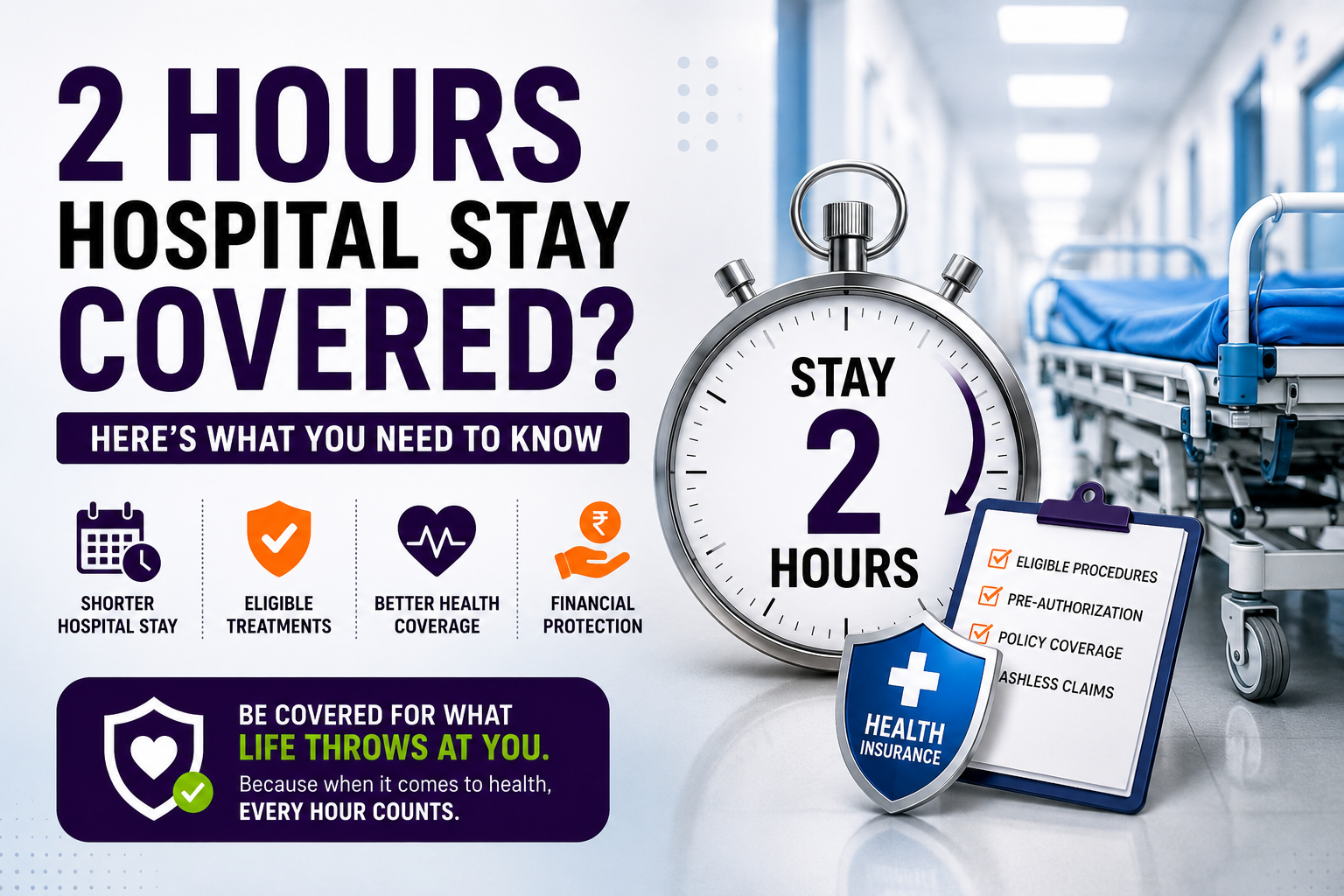
Healthcare is changing rapidly, and so is health insurance. Thanks to advancements in medical technology, many treatments that once required several days of hospitalization can now be completed within just a few hours. As a result, some health insurance policies have started covering eligible treatments even if the hospital stay is as short as 2 hours.
But does this mean every 2-hour hospital visit is covered? Not exactly. Here’s everything you need to know.
Traditionally, health insurance policies required a minimum of 24 hours of hospitalization to approve a claim. However, with the rise of modern medical procedures and day-care treatments, many insurers now cover certain procedures even when the patient stays in the hospital for only 2 hours.
This benefit is designed to make healthcare more accessible while reducing unnecessary hospital stays.
Medical science has made treatments faster, safer, and more efficient. Procedures that previously required overnight hospitalization can now often be completed in just a few hours.
Some benefits include:
No. Coverage depends on your health insurance policy and the type of treatment.
Generally, insurers consider:
Always read your policy document carefully before assuming a treatment is covered.
Before relying on this benefit, make sure to verify:
Understanding these details can help you avoid claim rejections.
This feature is especially useful for:
A 2-hour hospital stay being covered is a positive step in the evolution of health insurance. However, this benefit is not available for every treatment or every policy. The coverage depends on your insurer, policy terms, and the medical procedure involved.
The best way to stay protected is to review your existing health insurance policy and understand what benefits it offers. If you’re unsure, consult an insurance expert who can explain your coverage and help you choose a plan that matches your healthcare needs.
Need Help Understanding Your Health Insurance?
+91 85919 86471
CoverMitra Insurance Broking Pvt. Ltd. is an IRDAI-authorized insurance broking firm that aims to simplify insurance for its customers to make Smart Choices.
IRDAI License No. 600 Valid till: 01/06/2026
Incorporation date 10/10/2016
Quick Links
1. Arson: Intentional fire-setting or fraudulent activity.
2. Vacant or unoccupied property: Extended periods of vacancy.
3. Acts of war and terrorism: Damage caused by war or terrorism.
4. Nuclear incidents: Damage from nuclear reactions or radiation.
5. Wear and tear or lack of maintenance: Gradual deterioration or neglect.
6. Consequential losses: Indirect or business interruption losses.
7. Illegal activities: Fire damage resulting from illegal acts.
8. Specific property types: Certain high-risk properties or violations.
Remember to refer to your policy documents for precise details
1. Arson: Intentional fire-setting or fraudulent activity.
2. Vacant or unoccupied property: Extended periods of vacancy.
3. Acts of war and terrorism: Damage caused by war or terrorism.
4. Nuclear incidents: Damage from nuclear reactions or radiation.
5. Wear and tear or lack of maintenance: Gradual deterioration or neglect.
6. Consequential losses: Indirect or business interruption losses.
7. Illegal activities: Fire damage resulting from illegal acts.
8. Specific property types: Certain high-risk properties or violations.
Remember to refer to your policy documents for precise details
Connect on WhatsApp