
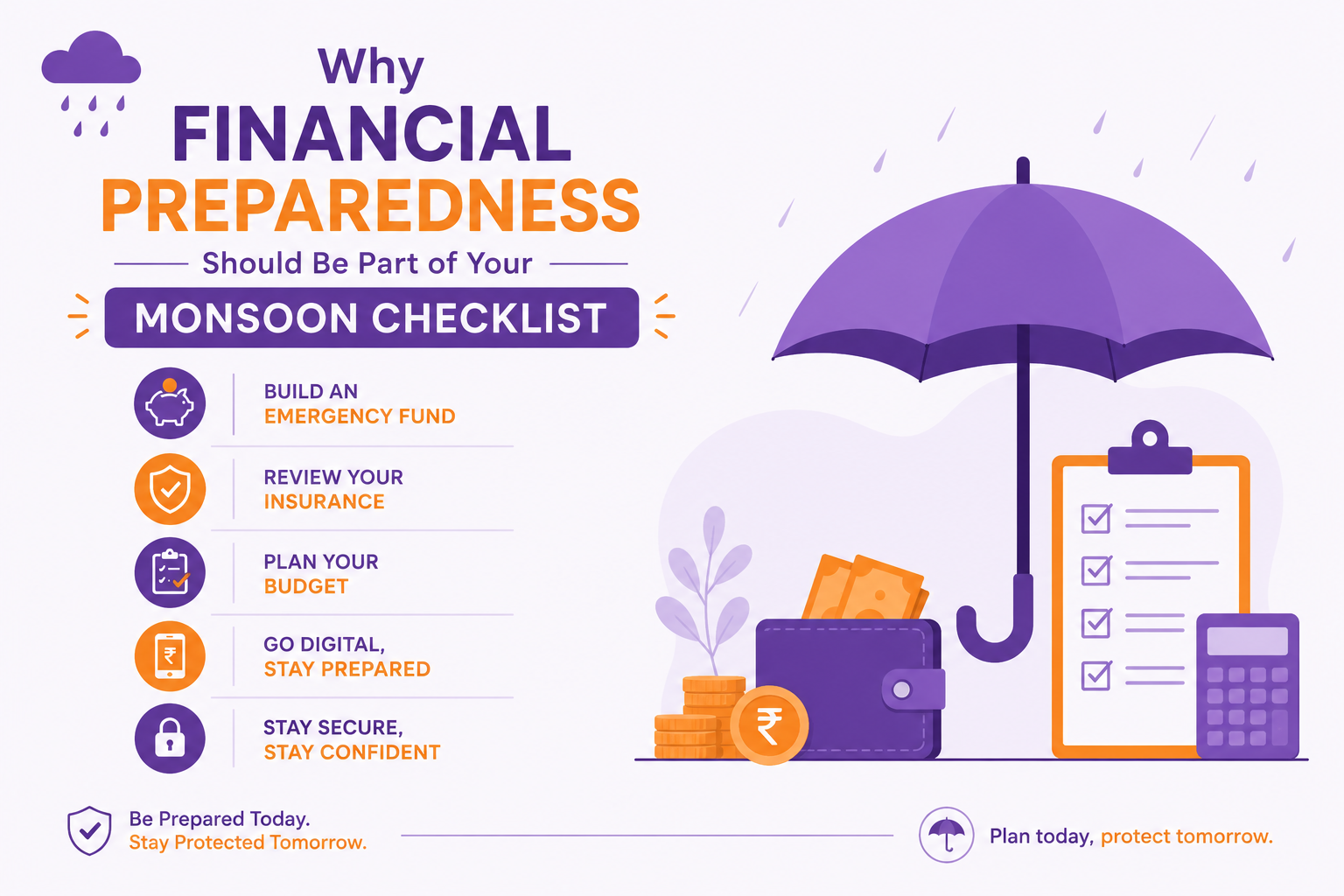
As the monsoon season approaches, most people focus on practical preparations such as repairing roofs, waterproofing homes, servicing vehicles, and stocking up on essential supplies. While these measures are important, one crucial aspect often gets overlooked—financial preparedness. Just as heavy rains can disrupt daily life, they can also create unexpected financial challenges. Including financial planning in your monsoon checklist can help you stay protected and stress-free during the season.
Monsoons often bring unforeseen expenses. Water damage to homes, vehicle repairs, medical emergencies caused by seasonal illnesses, and temporary disruptions to work can put a strain on household finances. Having an emergency fund in place ensures that you can handle such unexpected costs without relying on high-interest loans or credit cards. Financial experts generally recommend maintaining at least three to six months’ worth of essential expenses in an easily accessible savings account.
Insurance is another critical component of monsoon preparedness. Reviewing your health, vehicle, and home insurance policies before the rainy season can help ensure adequate coverage. Check whether your policies cover flood-related damages, waterlogging, or other weather-related incidents. Updating coverage limits and renewing policies on time can save you from significant financial losses when emergencies arise.
The monsoon season can also affect income stability for certain professions and businesses. Individuals working in transportation, construction, agriculture, or other weather-dependent sectors may experience temporary income disruptions. Planning a budget, reducing unnecessary expenses, and maintaining a financial buffer can help manage these fluctuations effectively.
Digital financial readiness is equally important. Power outages and travel disruptions can make physical banking difficult. Ensuring access to online banking, mobile payment applications, and digital copies of important financial documents can help you manage your finances smoothly even during adverse weather conditions. It is also wise to keep emergency contact numbers for banks, insurers, and financial service providers readily available.
Additionally, monsoon season serves as a good reminder to review financial goals and investments. Market volatility, changing economic conditions, and personal financial needs may require adjustments to your investment strategy. A periodic review helps ensure that your financial plans remain aligned with your long-term objectives.
In conclusion, monsoon preparedness should go beyond umbrellas and raincoats. Financial preparedness is an essential safeguard that helps protect your savings, assets, and overall financial well-being. By building an emergency fund, reviewing insurance coverage, managing expenses, and ensuring digital readiness, you can face the rainy season with greater confidence and peace of mind.
CoverMitra Insurance Broking Pvt. Ltd. is an IRDAI-authorized insurance broking firm that aims to simplify insurance for its customers to make Smart Choices.
IRDAI License No. 600 Valid till: 01/06/2026
Incorporation date 10/10/2016
Quick Links
1. Arson: Intentional fire-setting or fraudulent activity.
2. Vacant or unoccupied property: Extended periods of vacancy.
3. Acts of war and terrorism: Damage caused by war or terrorism.
4. Nuclear incidents: Damage from nuclear reactions or radiation.
5. Wear and tear or lack of maintenance: Gradual deterioration or neglect.
6. Consequential losses: Indirect or business interruption losses.
7. Illegal activities: Fire damage resulting from illegal acts.
8. Specific property types: Certain high-risk properties or violations.
Remember to refer to your policy documents for precise details
1. Arson: Intentional fire-setting or fraudulent activity.
2. Vacant or unoccupied property: Extended periods of vacancy.
3. Acts of war and terrorism: Damage caused by war or terrorism.
4. Nuclear incidents: Damage from nuclear reactions or radiation.
5. Wear and tear or lack of maintenance: Gradual deterioration or neglect.
6. Consequential losses: Indirect or business interruption losses.
7. Illegal activities: Fire damage resulting from illegal acts.
8. Specific property types: Certain high-risk properties or violations.
Remember to refer to your policy documents for precise details
Connect on WhatsApp